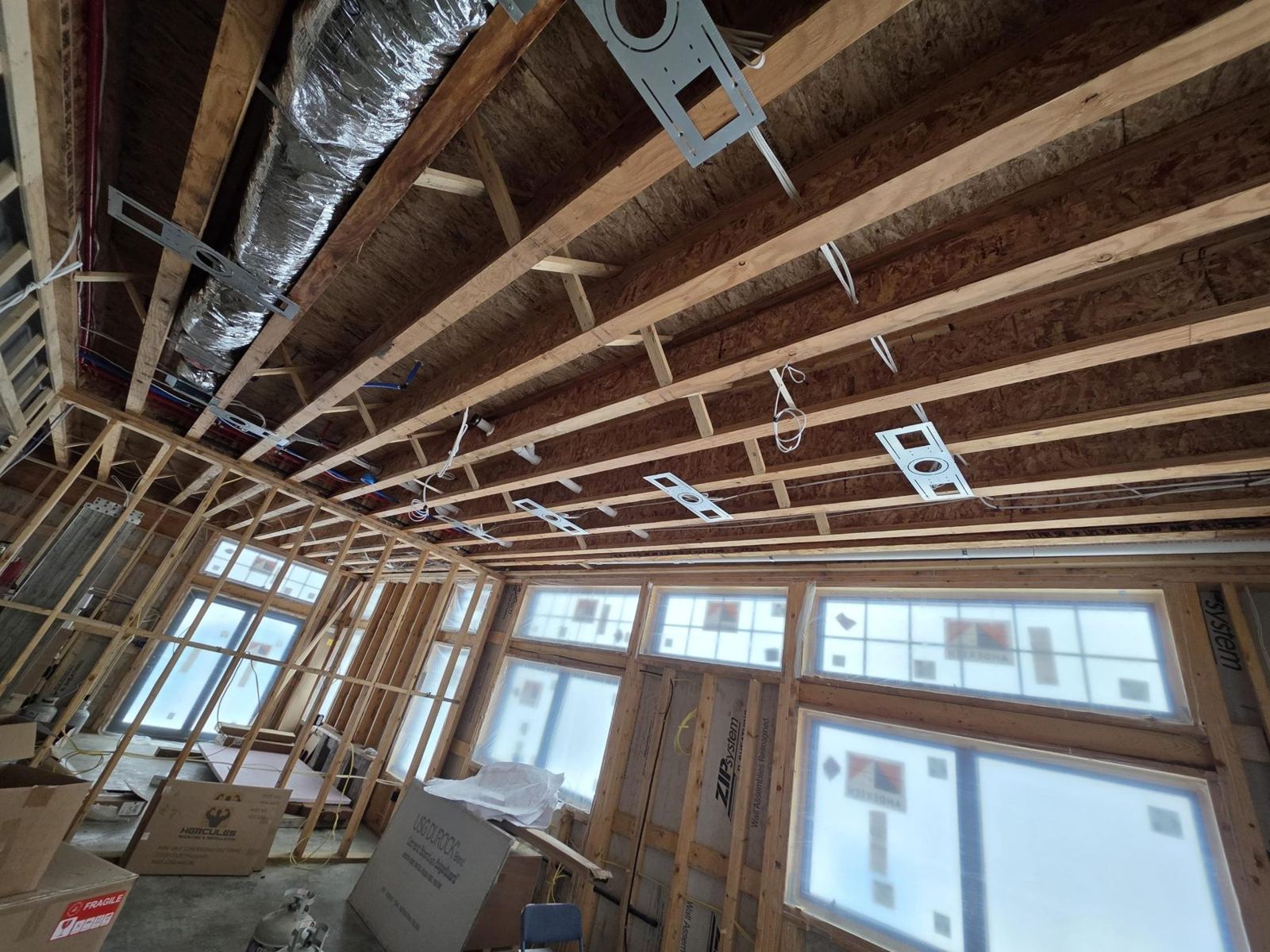
Once drywall is up, every cable you forgot becomes a surface raceway, a hole patch or a compromise. With the walls open, the same wire costs a fraction of the effort. This is the list we walk through on every renovation before close-up.
Network first
Run Cat6 to every TV location, home office, and anywhere you'd want a wired connection. Add drops in the ceiling for Wi-Fi access points in central spots on each floor, so the whole home gets strong coverage instead of relying on one router in a closet.
Bring every cable back to one equipment location with power and some ventilation. That's where the network, video sources and control system will live.
TV and media walls
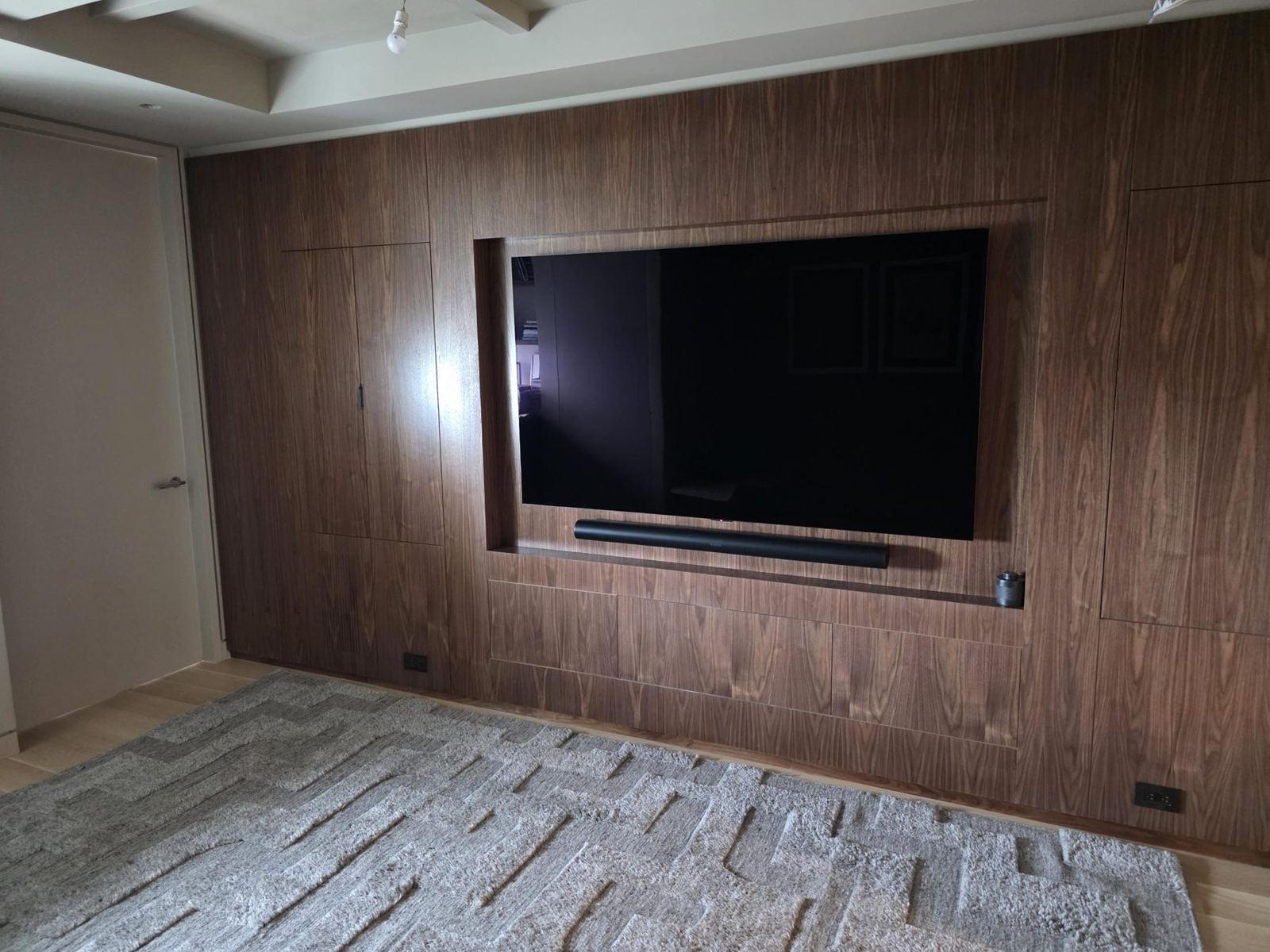
Put a recessed box behind the TV with power and low-voltage, and run conduit from that box down to the media cabinet or back to the equipment location. Conduit means you can pull new cables later as formats change, without opening the wall again.
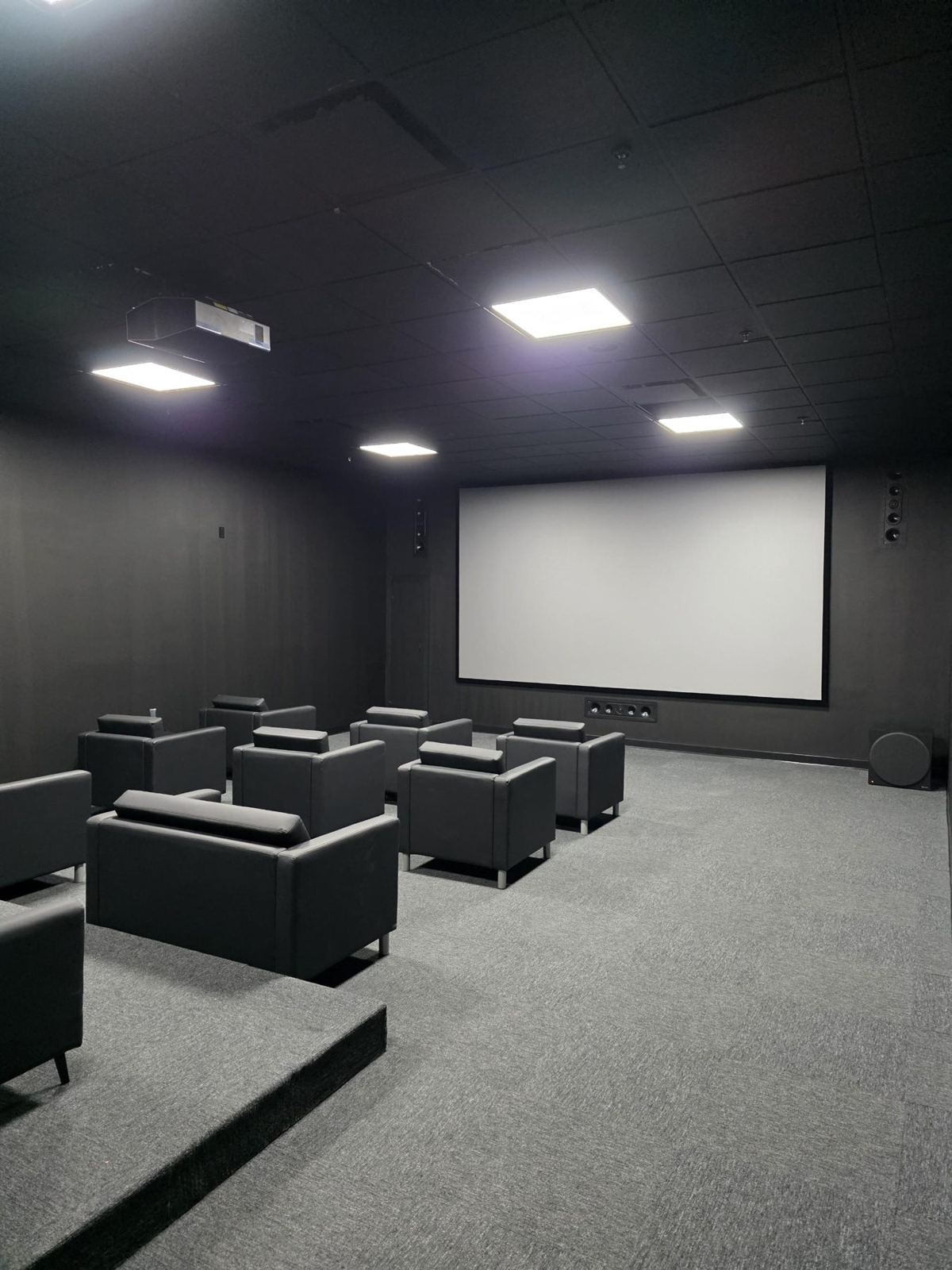
If you're considering in-wall or in-ceiling speakers, run speaker wire to each location now, even if the speakers come later.
Whole-home audio
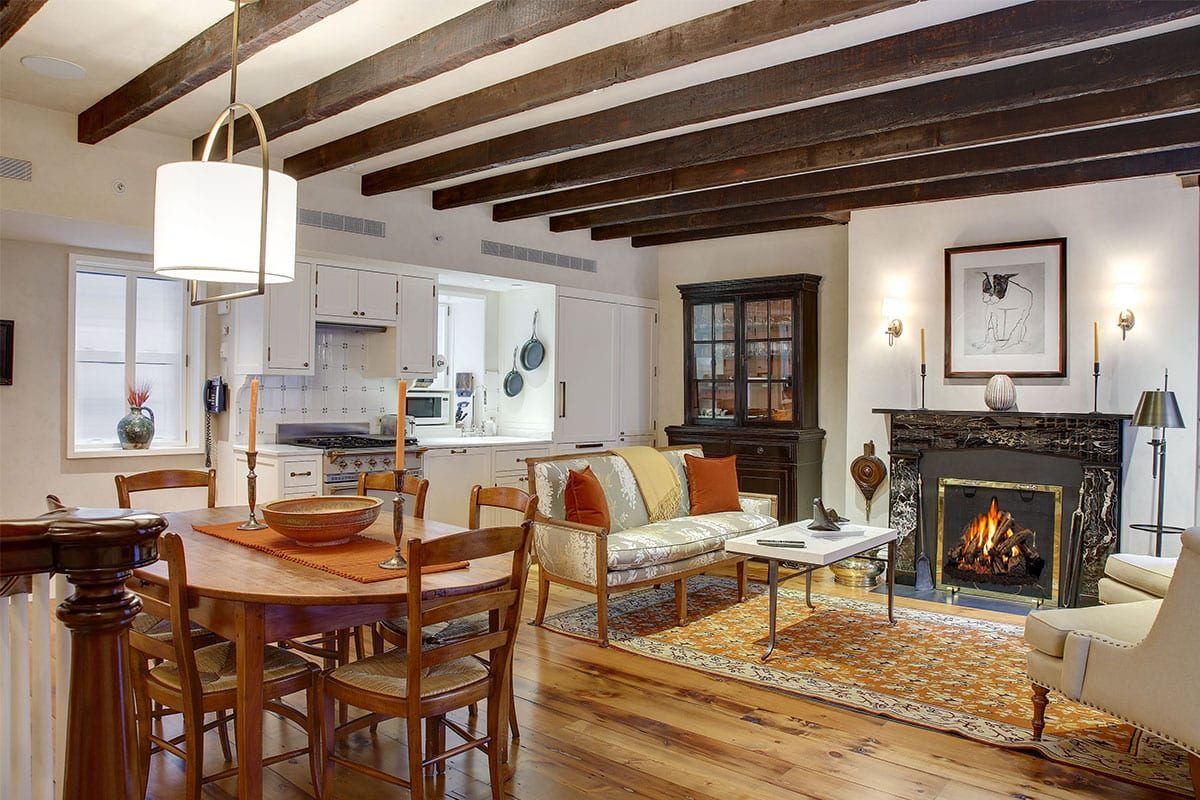
Mark ceiling speaker locations around the room's seating and furniture, not just on a grid, and run speaker wire from each pair back to the equipment location or to a local amplifier spot.
Bathrooms and outdoor areas can use moisture-rated speakers, so include them in the plan.
Shades and window treatments
Motorized shades need power or low-voltage at the head of each window, and recessed shade pockets need to be framed before the ceiling goes up. Decide on pockets versus surface-mounted brackets during framing, not after.
Group windows that should move together, so the wiring and keypads match how the room will actually be used.
Lighting control
Lighting control keypads replace banks of switches, but they need the right boxes and wiring at each location. Some systems also use a central panel, which should be planned into the electrical layout with dedicated space.
Think in scenes: what should one button do when you walk in, cook, watch a movie or leave the house?
Cameras, doorbell and access
Run a cable to every planned camera location, plus the front door for a video doorbell or intercom. Wired cameras are more reliable than battery models and can be powered over the network cable.
Photograph everything
Before drywall, photograph every wall with a tape measure in the shot. Those photos are what you'll use years from now to find a cable, a stud or a pipe without guessing.